Turning addresses into strategic insights

As a customer data verification software provider, we’ve been helping businesses ensure that they deliver products purchased by their customers online, to the right people at the right time since 2008.


Take our longstanding Postcode Lookup service, for example. Businesses that incorporate this at their online checkout enable customers to quickly – and accurately – add their address simply by inputting their postcode.


For the end user making a purchase, it’s a frictionless way to add their address details.  For our customers, this translates into smoother conversions and consistently valid data. It also reduces the risk of failed or returned deliveries, because the information entered is drawn directly from Royal Mail’s Postcode Address File (PAF) and confirmed by the end user before they click “buy now”.


In the 18 years since our inception, our products and services have evolved to include email, phone number, and even bank account validations at the point of checkout, too.


At the heart of everything we do is data - and our ability to harness it to improve the end‑user experience while reducing the risk of input errors.


However, no two addresses are the same.


A changing property landscape 


The UK and Ireland’s property landscape is not only dense but rapidly evolving. There are more and more properties being built that contain more than one home, and planning volumes pertaining to new properties are continually growing.


The Build to Rent market, for example, surpassed 300,000 homes in 2025, according to Knight Frank. The result? More homes are concentrated in smaller spaces, making delivery logistics harder to navigate.


Whilst the property landscape is evolving, if you’re a business that’s responsible for high delivery volumes, you need to evolve with it in order to maintain checkout simplicity for end-users, and reduce the hassle and cost of failed or missing deliveries to maintain profit margins.


Seeing the full picture with Enriched Data


In line with developing a wider product portfolio, we’ve launched Enriched Data – a suite of individual services designed to delve deeper into the nuances of the UK and Ireland’s growing list of addresses.


Each service is available separately, giving businesses the flexibility to choose the specific enrichment they need. Here are four examples of how these services can help organisations that rely on deliveries.


Multiple residences: Accuracy in Every Unit


As previously covered, apartments, shared housing, and multi-family housing are becoming a larger component of the UK and Ireland’s property makeup. If you’re a business that predominantly targets young adults and those more likely to live in high-density housing and multi-occupancy dwellings, then ensuring that your product actually reaches them is possibly as critical to your business as the sale itself.


Our Multiple Residence Data feature enables your customers to instantly identify and input their property at checkout, as our software includes the postcodes of 900,000 properties that fall under housing of this nature.


We’re living in an age where one postcode doesn’t simply represent one street. There are now many levels and layers linked to one postcode. Enriched Data allows you and the delivery services to see them very clearly.


Not-Yet-built: A glimpse into the future


The Royal Mail’s PAF is comprehensive. However, it only covers existing properties.


This is where our Not Yet Built Data feature comes in, which has been developed around Royal Mail’s Not Yet Built database - a specialised, monthly-updated databank identifying over 700,000 UK properties currently in planning or under construction.


The beauty of this dataset is that it allows businesses to identify future customers, validate addresses for new developments before they appear in the main PAF database, and target new-build areas.


Naturally, our Enriched Data services include this dataset, which means that Fetchify customers can use it strategically to engage with future customers and model anticipated demand volumes – even before the building’s foundations are in place.


Rooftop Geocodes: The finer details


In simpler times, a dropped pin would have provided enough information for a delivery driver to make a delivery. However, as property density increases, pressure on delivery drivers intensifies, and the number of online orders continues to grow, delivery details need to be much more explicit.


Through Fetchify’s Rooftop Geocodes feature, businesses can use geocodes to pinpoint an exact delivery location. Not only does a unique geocode provide a level of accuracy that a dropped pin doesn’t, but latitude and longitude coordinates support better logistics and route planning.


And, when used with other mapping tools, it allows businesses to identify location-specific access restrictions and any other obstacles that may provide barriers to delivery.


Eirecodes: Precision for Irish Addresses


Capturing accurate Irish addresses is critical for reliable deliveries, especially in remote areas where inconsistent addressing can cause delays. Eircodes are Ireland’s official postcode system, and each Eircode is unique to a single building. That level of precision can’t be guessed at - it requires the official Eircode database to ensure accuracy.


With Fetchify’s Eircodes data, businesses gain access to the most up‑to‑date Republic of Ireland ECAF dataset, sourced directly from Eircode. For those needing enhanced location detail, the optional ECAD data add‑on provides additional geocodes to further streamline delivery operations.


Eirecodes Data removes ambiguity, cuts the time associated with delivery drivers trying to find an address, and ensures that there are no failed deliveries.


A simple solution to a complicated problem


According to a report, the average cost of a failed delivery stands at £148.21.


When you consider that around 4.2 billion parcels were shipped in 2024, with around 1 per cent (42 million) being lost or damaged, as outlined in an article by The Standard, failed deliveries represent a significant cost for retailers.


The solution? Enriched Data, of course. If you already use Fetchify, then no additional integration or configuration is required, as it works natively with our Address Auto-Complete plugins.


Ready to turn addresses into strategic insights for your business?  Our team can help you unlock the full benefits of Enriched Data - from Not-Yet-Built datasets to geocoding - each designed to tackle a different delivery challenge. Reach out to our team to discover how we can help you streamline your operations, cut administration costs, and give your business a competitive edge.


About Fetchify


Fetchify’s address lookup and data validation platforms cover more than 250 countries, and increases customer conversion with the fastest, most accurate customer data capture. Fetchify’s flagship products – Address Auto Complete and Postcode Lookup – reduce friction at the checkout, and also significantly increase the number of successful deliveries. Founded in 2008, Fetchify processes millions of data transactions every day for clients ranging from startups to established high-street names, and offers a full suite of data validation tools, including phone, email and bank, too.

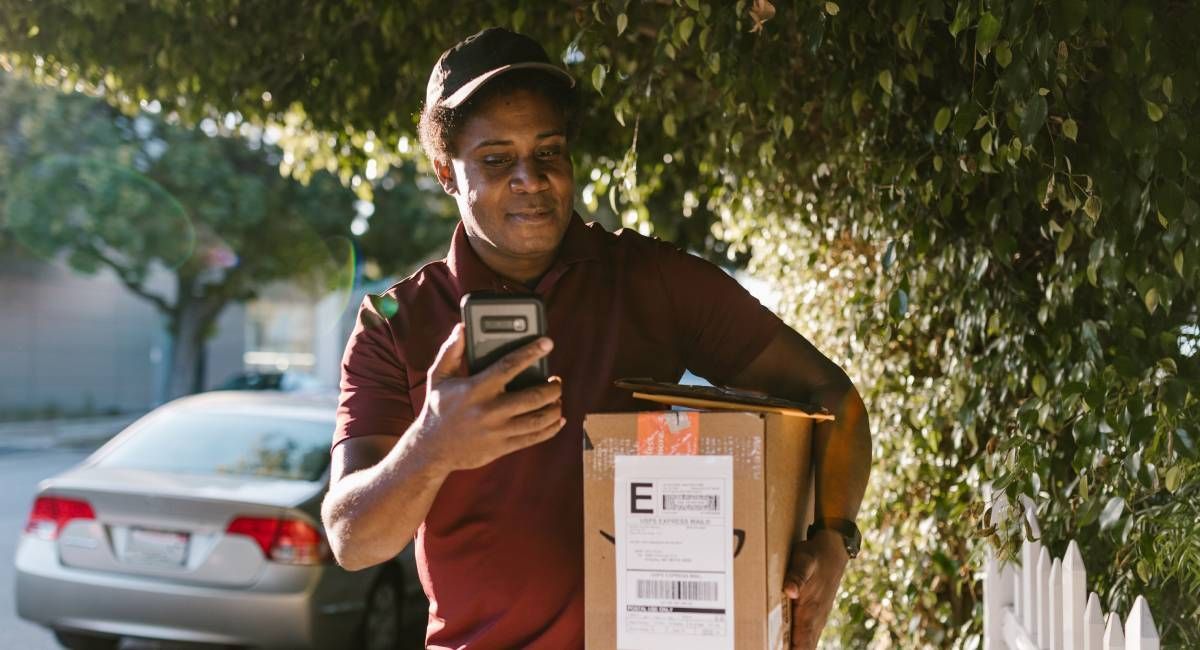
Courier delivering a parcel and checking his phoe ne
By Fiona Paton June 25, 2026
What is PAF? The Postcode Address File (PAF®) is Royal Mail’s definitive database of every deliverable address and postcode in the UK. It covers over 32 million delivery points and is updated monthly. If your business relies on accurate address data, at checkout, in your CRM, or for deliveries, PAF is the source that keeps it current. June 2026 in numbers Royal Mail made 62,027 changes to PAF this month. That is not a small number. It represents new homes that need delivering to, businesses that have moved or closed, streets that have been renamed, and addresses that were simply wrong and have now been corrected. Every one of those changes is a record in someone’s database that may now be out of date, and a delivery, a campaign, or a customer communication that could go wrong if the data hasn’t been updated. Delivery point changes at a glance Here’s the full breakdown of what changed, amended, and was removed from PAF in June:
By Fiona Paton June 18, 2026
How data decay is quietly removing your best customers before they ever decide to leave. Somewhere in your CRM right now, there is a customer you think you lost. They stopped buying about eighteen months ago. They went into a lapsed segment, got a couple of reactivation emails, did not respond, and were eventually written off. The assumption was that they moved on. What actually happened, in a surprising number of cases, is much simpler. They moved house. The reactivation emails went to an inbox they no longer check. The direct mail went to a flat that has a different tenant. The customer was not gone. They were just unreachable. And because the database had no way of flagging the difference, they were counted as churn. This is how data decay works. Not in dramatic failures, but in a steady accumulation of records that have quietly stopped being accurate. Around 30% of customer data goes stale every year, not because anything went wrong, but because people move, change jobs, switch email addresses, or get married. Left unaddressed, that figure compounds. A database that has not been properly maintained for three years may have a third of its records either partially or wholly unreachable. The problem is that it is almost invisible until it is already significant. A handful of bounced emails does not raise an alarm. Neither does a slightly elevated returns rate. The metrics look broadly normal because the volume of bad data is not yet high enough to distort them. By the time it is, the damage is done. The churn you cannot account for Most businesses have a reasonable handle on the customers they actively lose. Cancellations are tracked. Lapsed accounts are flagged. Retention programmes exist precisely to address the customers who stop buying. What those programmes cannot reach is the customer who never formally left. They sit in the CRM as a lapsed record. They count toward the database size. They get included in reactivation segments. They cannot receive the communication because the address on their record is no longer valid. The downstream effect is real. A repeat customer whose address changed after a house move never receives the offer that would have brought them back. A lapsed member does not see the renewal reminder and lets the subscription quietly expire. In both cases, the organisation records an attrition event. In neither case did the customer actually decide to leave. A customer who moved house is not the same as a customer who left. That distinction tends to matter quite a lot when you are trying to work out where your retention budget should go. Why reactivation campaigns underperform When a win-back campaign comes back with poor results, the instinct is to interrogate the campaign. The subject line gets tested. The offer gets more aggressive. The timing gets adjusted. All of that is reasonable. None of it helps if a meaningful share of the list cannot receive the email in the first place. A lapsed customer segment typically contains three types of contact: people who genuinely disengaged and are unlikely to respond, regardless, people who might respond to the right message, and people who would respond, but the email never arrives because the address has changed. The frustrating thing is that you cannot easily tell these groups apart from the outside. Low open rates and low click-through rates look the same whether the cause is disengagement or data decay. Email is only part of it. Physical address decay affects direct mail and delivery. Phone number decay affects SMS and outbound calling. Each channel erodes at its own rate, and most organisations are not tracking the accuracy of their data across all of them. 30% of customer database records become inaccurate within 12 months, without any action by the customer. What changes when the data is clean A data cleanse does not just improve deliverability, though it does that. It changes what the numbers actually mean. When ghost records are removed from a lapsed segment, the remaining file is smaller but more meaningful. Reactivation revenue from that cleaned list is real revenue, not a percentage improvement calculated against contacts who were never going to respond. The churn figure, once recalculated without the unreachable records, is often more positive than expected. Some of what looked like permanent attrition turns out to be recoverable. There is a GDPR dimension too. Article 5(1)(d) requires that personal data be kept accurate and, where necessary, up to date. The ICO can issue fines of up to £17.5 million for data accuracy failures. Most organisations are not at serious risk of enforcement, but most organisations also have not checked how their database holds up against a standard they are legally required to meet. The more common consequence is commercial rather than regulatory. Marketing budgets applied to an inaccurate list simply do less than they should. The same spend, against a validated file, produces measurably better results. Not because the campaigns improved, but because the contacts can actually receive them. The practical starting point Addressing data decay does not require a significant IT project. For most organisations, the starting point is a cleanse of the existing CRM: matching records against current address databases, identifying email addresses with persistent bounce history, removing duplicates, and flagging phone numbers that are no longer in service. Done once, it resets the foundation. Done regularly, and combined with validation at the point of data capture, it prevents the drift from accumulating again. The customers in those unreachable records did not all decide to leave. Some of them are still out there, still buying in your category. They just moved. Improve your data health and protect your business today. Reach out to our team below for a free data health check.
By Fiona Paton June 15, 2026
Jay’s career has never followed a straight line. Electronics engineering. Automotive systems. A social app for hostels that was about to launch just as COVID closed every hostel in the world. A pivot into web development. And eventually, Fetchify - where he now leads the team building the technology that keeps millions of data lookups running accurately every day. Looking back, the route makes perfect sense. Jay has always been drawn to what’s next. To faster feedback. To building things that work and seeing them work quickly. Software gave him all of that in a way that automotive engineering, for all its complexity, eventually stopped doing. The long way round Jay studied electronics engineering and came out of university specialising in embedded systems. By 2015, he was working on automated parking systems - the kind built on sensors and split-second decisions - and for a while, he found it genuinely interesting. But something was missing. “I wanted to see results faster,” he says. “With embedded systems and automotive work, the feedback loops are long. I wanted to build something and see it working.” So, he pivoted. He taught himself mobile development and from there, a startup building a social app for hostels and hotels - a platform that matched guests by shared interests, so someone travelling alone could find other guests up for the same activities. It was a genuinely good idea, with a handful of places trialling the beta version. Then 2020 arrived, the hospitality industry stopped overnight, and the timing simply couldn’t have been worse. Most people would have counted it as a setback. Jay counts it as part of the story. Finding something that fits He joined ClearCourse, initially working on the membership CRM side of the business. When a role came up at Fetchify, he knew it was the one. Tech Lead. A team to run. Real scope to build, improve and innovate - and enough space to do it properly. “What I love most about my job is the chance to be innovative and improve the quality of the software - and the opportunity to keep learning. There’s always something new.” His approach to leading the team reflects the same values. He talks about trust a lot - giving people the space to do things the way they think makes sense, rather than prescribing the path. The team checks in daily, whether that’s to swap ideas, talk through a problem, or join a scrum call. It’s not just his immediate team either: the wider Fetchify team, and within the ClearCourse group, there’s a culture of helping out. Of people being willing to lend a hand when it’s needed. “Software development can feel like a solo job, but actually the team here is solid, and we enjoy working together.” The thing he's most excited about Ask Jay what he’s most passionate about right now, and the answer is immediate: AI. Not in an abstract, trend-chasing way - but with a specific and considered view of what it actually means for software developers and the organisations they build for. “AI is raising the bar for what developers can produce. But I see it as a two-way collaboration - a helping hand to do the grunt work, while the ideas, the creativity, the innovation still come from people. It should help people achieve more in less time. Not replace the thinking.” His long-term goal is to help other ClearCourse businesses integrate AI into their products - starting, naturally, with Fetchify. For a company built on data accuracy, the intersection of clean data and AI capability is not an abstract future conversation. It’s already the direction of travel. Beyond the screen Jay grew up in Egypt, and travel is still one of the things he values most. He heads home to family a couple of times a year, and fits in city breaks wherever he can - somewhere new, with good food and different people and things to explore. His ideal off-duty scenario involves a beach, good conversation, and absolutely no particular agenda. The gym, friends and music round it off - time away from the screen that, for someone whose working life involves building technology that processes millions of data points a day, seems like a fairly sensible skill. When he imagines the distant future - the looking-back version - he pictures a career of creation, innovation and the willingness to embrace whatever comes next. That, and a beach somewhere warm. We’re very glad the winding road brought him to Fetchify.
By Fiona Paton May 28, 2026
“Fetchify turned what felt like a crisis into a straightforward fix - and in just a couple of days. We went from not being able to contact anyone to generating four new client applications from a single send. The data cleanse didn't just fix a problem - it opened the door again.” – Marcel Stirling, Phoenix Insolvency
Show More