Unpacking Experience, Embracing New Adventures - Meet Sarah

 A fresh chapter begins


After eight years of travelling to exciting places in the world of events, Sarah has finally unpacked her bags and settled into a brand‑new adventure with the ClearCourse group at Fetchify.


What makes this move so exciting is that Sarah isn’t just bringing a suitcase full of experience - she’s also carving out space to learn, grow, and lend her support wherever it’s needed. Whether it’s her customers, her teammates, or her family, Sarah has a knack for showing up with warmth and dedication.


We caught up with her to hear how the transition is going, and true to form, she’s embracing the change with positivity and an eagerness to learn. It’s clear she’s already making her mark, blending her event‑world expertise with fresh energy for this next chapter.


Closing a chapter at Fusion


I loved my job and team at Fusion - being able to travel to places both at home and abroad was truly the opportunity of a lifetime.


Having started as an Account Exec, I was a Senior Account Manager before the arrival of my first child. After taking a break to spend precious time with my little one, I later returned part‑time in a Customer Success role.


Fast forward a few years, and with the arrival of my second child last September, I felt the pull for something new - a fresh challenge, a different rhythm. The opportunity to join the team at Fetchify came at just the right moment, offering me the chance to blend my wealth of experience with the excitement of a new chapter.


Stepping into my new role


My new adventure starts as Customer Service Manager, taking charge of support queries that come through the helpdesk and lending a hand wherever I can - whether that’s to customers or my teammates.


Coming from a role where I knew the ins and outs like the back of my hand, it feels a little strange to be starting fresh again. But that’s part of the excitement: everything is new, and every day brings a chance to learn.


With so many different aspects to Fetchify, I’m on a huge learning curve, and while that can feel daunting, it’s also energising. I’m ready to grow into this role and make it my own.


The thrill of something new


I’m really excited about the chance to learn and develop new skills. This role feels like an opportunity to carve out a fresh level of dedicated support for customers - one that’s not only effective but also personable.


My background gives me a unique edge in supporting the team, too, especially the account managers. Having walked in their shoes, I know what’s required and, in time, I hope to anticipate where I can step in to help.


It’s a win‑win all round: customers get thoughtful, tailored support, and the team gains a colleague who understands their world inside out. And for me, it’s the excitement of growing into something new while making a real difference.


Finding my place in the team


I feel so fortunate to be working with amazing people again - I’m absolutely loving my new team. They’re inspirational, friendly, and did I mention knowledgeable?


Whatever you need, you just have to ask, and someone is always on hand to support me at this stage.


It’s also great to be in such a flexible role, where the team trusts you to work unsupervised because they know you’ll work hard and give 100%. I’m really looking forward to contributing in ways that take some of the load off them and free them up, whether that’s by stepping in or taking initiatives along the way.


Life beyond the desk


When I’m not working, I happily spend all my time with my family. We love getting outdoors - whether it’s exploring country parks, going for long walks, or just enjoying nature together.


Spending time with close friends who also have kids is another favourite. The children play, we catch up, and it always feels easy and fun. Honestly, anything goes as long as my children and family are with me.


Family comes first, always. When I became a mum, I promised myself I would be there to spend time with them, and that’s something I hold onto every single day.


Looking ahead


Working as an Account Manager in events was a lot like project management - overseeing every detail and making sure everything came together. That’s something I’ve always enjoyed and feel confident in, so if the chance comes up to use those skills again later, that would be great.  For now, though, I’m really happy on this new path. It’s fresh, it’s challenging, and I’m enjoying everything it brings.


About Fetchify


Fetchify’s address lookup and data validation platforms cover more than 250 countries, and increases customer conversion with the fastest, most accurate customer data capture. Fetchify’s flagship products – Address Auto Complete and Postcode Lookup – reduce friction at the checkout, and also significantly increase the number of successful deliveries. Founded in 2008, Fetchify processes millions of data transactions every day for clients ranging from startups to established high-street names, and offers a full suite of data validation tools, including phone, email and bank, too.

By Fiona Paton July 27, 2026
“I found the process a painless exercise, which involved very little extra work from me, and the success was very high. I would recommend anyone who is experiencing issues with old data to go through a data cleanse.” – Michael Gillespie, Manager of Field Testing, Sports Labs
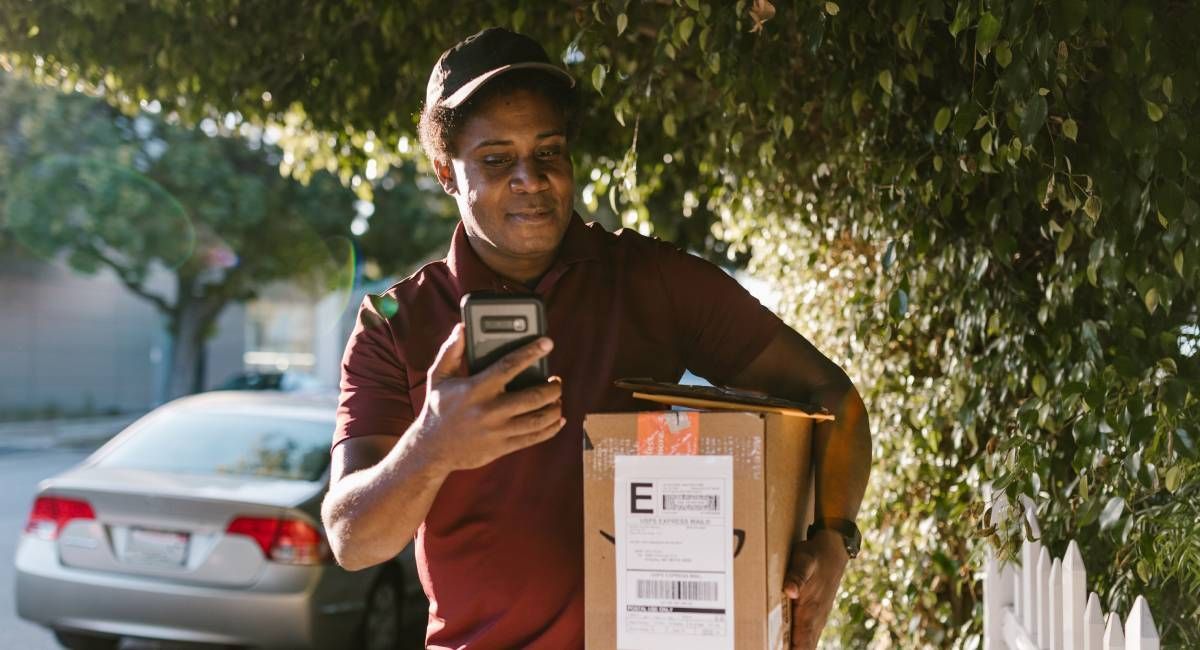
Courier delivering a parcel and checking his phoe ne
By Fiona Paton July 21, 2026
What is PAF? The Postcode Address File (PAF®) is Royal Mail’s definitive database of every deliverable address and postcode in the UK. It covers over 32 million delivery points and is updated monthly. If your business relies on accurate address data, at checkout, in your CRM, or for deliveries, PAF is the source that keeps it current. July 2026 in numbers Royal Mail made 54,025 changes to PAF this month. That is not a small number. It represents new homes that need delivering to, businesses that have moved or closed, streets that have been renamed, and addresses that were simply wrong and have now been corrected. Every one of those changes is a record in someone’s database that may now be out of date, and a delivery, a campaign, or a customer communication that could go wrong if the data hasn’t been updated. Delivery point changes at a glance Here’s the full breakdown of what changed, amended, and was removed from PAF in July:
By Fiona Paton July 20, 2026
The Address Is Only Half the Journey. Meet nShift. Fetchify ensures the address is correct at checkout. nShift makes sure the parcel gets there. A validated address is a great start, but it's only half the journey. From there, the parcel still has to find the right carrier, the right label, and the right doorstep. That's a different problem, and it's the one nShift solves. What nShift does nShift is a delivery management platform connecting businesses to 1,000+ carriers across 190 countries through a single integration, checkout, delivery options, carrier selection, tracking, and returns, all in one place instead of a separate system per carrier. Customers using nShift see a 20% increase in conversions at checkout and up to 60% fewer "where is my order" queries. Superdry is a good example with 515 stores, 21 websites, and shipping to 100+ countries. As the business scaled internationally, nShift let them onboard new carriers fast and get full visibility across every shipment. As Gordon Knox, Superdry's Business Transformation and Logistics Director, put it, onboarding carriers quickly was essential to a growing international business; that's exactly what they got, plus the data to hold carriers accountable on cost and service. Why we're recommending them Some of nShift's own clients already use Fetchify to validate their checkout data, so we've seen firsthand what good address data unlocks downstream in nShift's platform. That's the real reason for this partnership: the two products solve adjacent halves of the same problem, and we've watched it work in practice. Fetchify validates the address in real time, catching typos, missing flat numbers, and misspelt street or town names as the customer types, without slowing the checkout down, and confirms phone and email are live at the same time. That clean, structured data flows straight into nShift, which picks the right carrier automatically and keeps the customer updated with branded tracking. No reformatting. No manual fixes. No booking failures from bad data. The result: higher conversion, fewer failed deliveries, fewer support tickets, because the two weakest links in the checkout-to-doorstep chain (bad addresses, clunky carrier logistics) are both handled properly. Who this is for Any ecommerce business shipping physical goods stands to benefit, especially if you're juggling multiple carriers, shipping cross-border, or scaling into markets where one carrier doesn't cover it. If delivery reliability has become as much of a pain point as address accuracy, this is worth a look.
By Fiona Paton July 15, 2026
Why membership organisations can't afford to confuse data failure with genuine attrition, and what to do about it. Membership organisations are meticulous about tracking renewals. Lapse rates, retention percentages, and win-back campaign performance. The numbers are watched closely because every member lost represents real, recurring revenue that is hard to replace. But there is a category of membership loss that most organisations are not measuring at all, because it does not look like a loss. The renewal notice went out. The direct debit ran. The email was sent. On paper, everything worked. The member just never received any of it, because the contact details in the CRM are no longer correct. That is not attrition. It is a data failure. And across an industry that collectively manages tens of millions of member records, the scale of that problem is significant. The context that makes this more urgent Discretionary memberships are under pressure. The cost-of-living squeeze that tightened household budgets from 2022 onwards has made memberships that feel optional the first thing to go when money is tight. Even organisations with healthy long-term growth are seeing more volatility in year-to-year renewals as a result. In that environment, the last thing any membership organisation can afford is to also lose members it could have kept. Where membership data goes wrong Membership databases face a specific version of the data decay problem. Individual consumer databases decay because people move house, change email providers, and update their details without telling organisations they have. Membership databases face all of that, and an additional layer. For organisations with corporate or trade members, a single record represents an organisation rather than a person. The contact within that organisation (the membership secretary, the finance director, the branch representative) changes. People move on, retire, change roles. When they do, the relationship between the membership organisation and its member frequently breaks down not because the member chose to leave, but because communications are still going to someone who is no longer there to receive them. The result plays out across three specific failure points: EMAIL The most common and least visible failure. A contact leaves, their email address is deactivated, and every communication sent to that address (renewal notices, event invitations, membership benefits updates) vanishes. Hard bounces accumulate quietly. The member organisation receives nothing and assumes the membership is simply not being renewed. The membership body assumes disengagement. Neither has the full picture. BANK AND DIRECT DEBIT DETAILS For memberships renewed by direct debit, banking changes are a silent killer. A company changes its banking provider. A new finance director updates account details. The existing direct debit mandate becomes invalid, payments fail, and depending on how the failure is handled, the membership lapses without the member organisation ever intending to cancel. Card payments carry a similar risk. An expired card on file can produce the same quiet failure, particularly for individual members renewing on their own card. ADDRESS AND CONTACT DETAILS Physical correspondence, including renewal packs, membership cards, and formal notices, still matters for many membership organisations. When a member company moves, changes its registered address, or restructures its office function, paper communications go astray. The record in the CRM shows an address that was correct at the point of joining. Three years later, it reflects a reality that no longer exists. The numbers behind the problem The UK's largest membership bodies collectively manage memberships in the millions. MemberWise's Influence 100 list puts total membership across the top 100 UK bodies at over 40 million. Apply the standard data decay rate of 30% per year to a sector managing membership records in the millions, and the scale of the problem becomes clear. For an organisation with 100,000 members that has not run a data cleanse in the past twelve months, somewhere in the region of 30,000 of those records may now contain at least one material inaccuracy. Why it's harder to spot in membership organisations In eCommerce, data quality problems show up quickly. A failed delivery generates a return. A hard bounce triggers an alert. The feedback loop is short enough that the problem surfaces before it compounds too far. In membership organisations, the feedback loop is annual. Renewals happen once a year. A contact detail that goes stale in February may not cause a visible problem until the following January, when the renewal communication fails to land. By then, twelve months of communications have been going to the wrong place, the member has had no contact from the organisation, and the lapse looks, from the outside, like a deliberate decision. What good data management actually covers Many membership organisations now offer self-service portals where members can update their own contact and payment details directly, and that is genuinely useful. When members engage with it, the CRM stays current without any manual intervention. The practical limitation is engagement. Members update their details when something prompts them to: a failed payment, a bounced communication, or a prompt at renewal. Between those moments, contact details drift. Validation and data cleansing work alongside a portal rather than instead of it. Validation at the point of update, whether a member is joining, renewing, or updating their details, catches errors as they enter the system. Address, email, and bank account validation each do a specific job: • Address validation confirms correspondence will reach the right location, checked against the current Royal Mail PAF data. • Email validation identifies inactive addresses before renewal notices go out. • Bank account validation confirms direct debit mandates are still valid before payment runs are processed. Data cleansing handles the records that validation at capture cannot reach: the existing database. A cleanse run against current address and contact databases identifies records that have drifted since joining, flags emails with persistent bounce history, and surfaces direct debit details that are no longer valid. Done ahead of a renewal cycle, it means communications go out to an accurate list rather than one that reflects the membership as it existed twelve or eighteen months ago. The organisations that manage this well are not necessarily the ones with the lowest lapse rates. But they are the ones that know, with confidence, which part of their lapse rate is real attrition and which part is recoverable, because their data tells the difference. Starting the conversation For most membership organisations, data quality sits in the gap between the membership team and the IT or CRM function. It is everybody's problem and nobody's priority, until a renewal cycle underperforms and the question of why becomes harder to answer. The most effective way to move the conversation forward is to quantify it: how much of your lapse rate is genuine attrition, and how much is invisible data failure that a bounced email, a failed direct debit, or an unverified record has been quietly hiding. Find out where your membership data stands Fetchify's validation tools cover address, email, and bank account data, helping membership organisations keep records current at the point of capture and across existing databases. Speak to the team or explore the tools below.
Show More