Fetchify provide the Workplace Depot with essential Postcode Lookup

"I don’t think we could be without Fetchify now. It’s an essential part of our business – particularly as we grow." – Steve Needham, Purchasing Manager

The Workplace Depot is a UK-based family run business, specialising in workplace products supply schools, universities, construction companies and even people doing a little DIY at home.


Everyone from the BBC to football teams and scout groups benefit from their services. Started 27 years ago by Ken Miller and originally named Central Source, the company started out creating print catalogues for their distributor network. Around 2010, they started their website and, what started as a small area of the business, has quickly grown to be their main channel. In 2019, they shifted fully online. With the change in name to more accurately reflect their business, the business has gone from strength to strength. Working entirely through their Magento website, they are now turning over roughly half a million pounds every month.


Our aim at Fetchify is to help your online customers to enter addresses correctly and quickly. For The Workplace Depot is means:


  • Trustworthy and up to date address data including the latest new builds
  • Saving admin time spent identifying incorrectly entered addresses
  • Reduce failed deliveries caused by customer data errors


The challenges


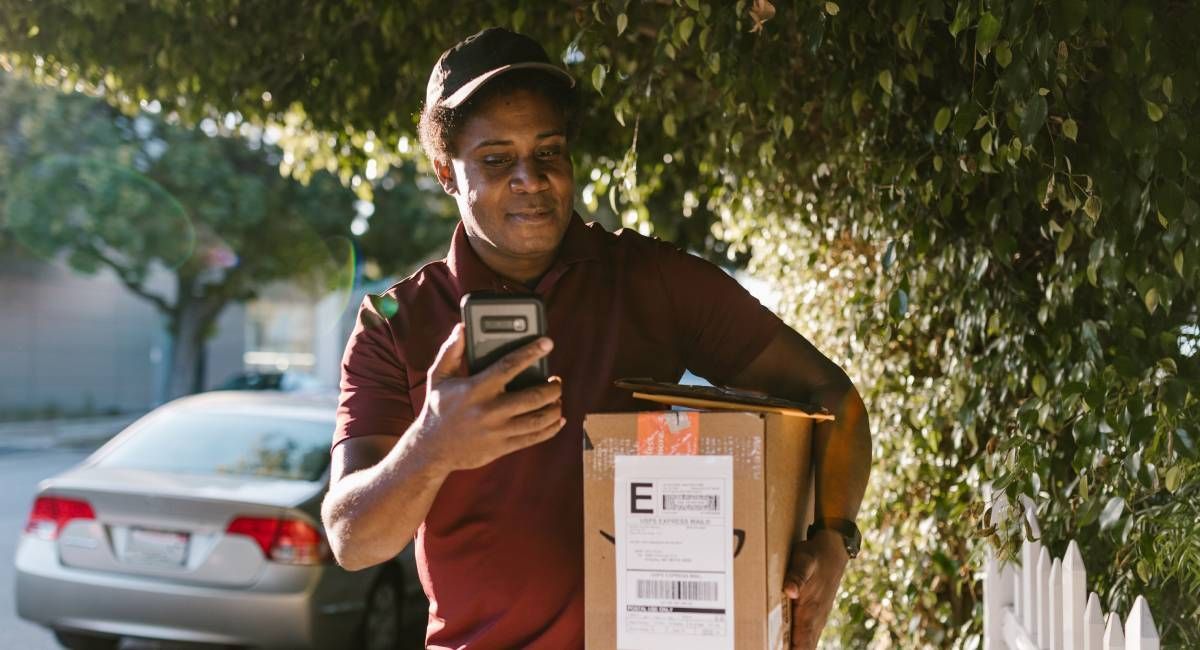
With high volumes of orders going through the website and heading out for delivery every day, valuable time was lost in finding and verifying addresses based on incorrect or incomplete data entered at checkout. Providing workplace equipment, The Workplace Depot delivers to many new builds and construction sites, the addresses of which they were previously unable to search and verify, causing delays to deliveries.


They needed a reliable and regularly updated database to ensure the latest addresses would always be available. Their previous address validation provider simply didn’t update regularly enough to keep up with the ever-growing number of new builds and thousands of other changes to the UK’s address database every single day.


With hundreds of deliveries heading out every day, failed or delayed deliveries can easily become a real business pain point, costing The Workplace Depot time and money in administration and delayed deliveries.


"What we need is something that is very trustworthy and always up to date and Fetchify Postcode Lookup has always been brilliant for us."


How Fetchify helps


Fetchify is a pioneer in SaaS address lookup and validation solutions and offers a range of data verification solutions.


Recommended by The Workplace Depot’s own in-house tech consultant, Fetchify works with only the best data providers. In the UK that is the Royal Mail PAF database which Fetchify further supplements with Ordnance Survey and armed forces data. This is updated daily including the addition of new build details which The Workplace Depot say has been an “unbelievably helpful” addition to their business process. Integrating Fetchify’s postcode lookup guarantees The Workplace Depot is now capturing accurate and verified addresses at checkout every time.


Not only does this save admin time in finding and fixing data entry errors, it also eliminates failed deliveries caused by those errors. Where drivers would previously have needed to call back to head office asking for assistance in locating the delivery point, the addresses are now verified at point of entry, ensuring a smooth delivery and, ultimately, happy customers.


As a primarily B2B business based in the UK, The Workplace Depot chose to use Fetchify’s Postcode Lookup address validation solution. The simple interface is a household staple of UK-based online shopping.


"You put your postcode in, you the option to choose the house number and you click on that. I think people have got used to that and they expect it at every checkout."


The key benefits delivered by Fetchify’s Postcode Lookup are:


  • Reliable data with daily updates
  • Recognisable interface for a smoother customer journey through checkout
  • Huge saving in admin time needed to verify addresses entered by customers at checkout
  • Eliminated delays and failures in delivery caused by bad address data


"We get on average 200-300 orders a day. You can imagine for a driver, trying to check postcodes, it would just take all day. We can’t say with how pleased we are with you guys and what you do for us."


Results, return on investment and future plans


With Fetchify’s Postcode Lookup integrated into their checkout and eliminating the costs in time and money previously caused by errors in address data, The Workplace Depot’s technical and admin teams can use their time instead to focus on continuing to build and promote the brand. Fetchify are proud to be an integral part of The Workplace Depot’s business and support them as they continue to grow.

About Fetchify


Fetchify’s address lookup and data validation platforms cover more than 250 countries, and increases customer conversion with the fastest, most accurate customer data capture. Fetchify’s flagship products – Address Auto Complete and Postcode Lookup – reduce friction at the checkout, and also significantly increase the number of successful deliveries. Founded in 2008, Fetchify processes millions of data transactions every day for clients ranging from startups to established high-street names, and offers a full suite of data validation tools, including phone, email and bank, too.

Two colleagues tracking data on an iPad
By Fiona Paton December 3, 2025
New Year. New Approach. The countdown to 2026 is on, and if you want to hit the ground running, it’s time to think about the one thing that can make or break your year: your data. We’ve all heard the saying “start as you mean to go on.” Well, if that start involves messy, inaccurate data, you’re already tripping before you’ve left the starting gates. Clean, accurate customer data is the foundation for everything: smarter campaigns, smoother deliveries, and sales that actually reflect the effort you put in. Without it, you’re fighting uphill from day one. The truth? Bad data isn’t harmless. Every failed delivery, bounced email, or wrong phone number chips away at your bottom line. In the UK alone, dirty data drains an eye‑watering £900 billion a year from businesses. And with 1 in 5 records typically incorrect, each one costs around £81 annually in wasted spend, lost opportunities, or compliance risks. Why it matters? Still need convincing? Here are the stats that show why clean data is non‑negotiable: Confidence in every customer record : Royal Mail PAF makes 3,000–5,000 updates a day - over 1 million a year. Compliance and reduced risk : UK GDPR requires customer data to be accurate and up to date. Get it wrong, and you risk fines of up to £17.5M or 4% of global turnover. Lower delivery failure and service costs : UK businesses lose £1.6 billion a year to undelivered parcels. At £125 per parcel, even small errors add up fast. Protect marketing ROI : 50% of customers walk after a single failed delivery, and 80% won’t come back at all. The Challenge That’s why starting 2026 with a data cleanse isn’t just smart - it’s essential. Clean data means clear visibility, fewer delivery failures, better targeting, and reduced compliance risk - without the operational headache. By tackling bad data upfront, you give yourself the perfect launchpad for growth, instead of joining the many organisations that end up spending 10–30% of their revenue fixing problems after the fact. So here’s the challenge: make 2026 the year you stop letting bad data hold you back. Cleanse it, validate it, and set yourself up for campaigns that connect, deliveries that delight, and results that truly count. The message is clear: dirty data costs growth, trust, and opportunity. By cleansing upfront, you protect your ROI, strengthen compliance, and give yourself the platform to launch a year of real momentum.
By Fiona Paton November 24, 2025
The Background A leading financial services provider needed to strengthen the accuracy of customer information during digital onboarding. They handle thousands of new applications every month and rely on fast, frictionless sign-up journeys that still meet strict compliance, risk and verification requirements. Their existing process struggled with poor quality address and bank details, leading to increased manual checks, slower approvals and higher abandonment. Incorrect or incomplete address data was also creating downstream issues for customer communications, account documentation and regulatory reporting. The organisation wanted a solution that could improve data quality at the point of entry, reduce friction in the onboarding journey and support their compliance teams with more accurate source information. The Solution The client selected Fetchify to enhance customer onboarding with accurate, validated address and bank data as soon as a user enters it. Fetchify provided: Global address validation UK enhanced datasets where deeper detail is available Bank account validation to check the sort code and account number accuracy Simple integration into their digital onboarding flow Consistent formatting to support KYC, AML, and compliance checks By validating information early, Fetchify helped streamline the entire customer journey. The Result After implementing Fetchify, the organisation achieved: Reduction in applications failing due to incorrect address or bank details Faster onboarding with fewer manual reviews Greater confidence in customer identity information Better outcomes for compliance and risk teams Improved data quality flowing into internal systems A smoother experience for new customers Why Fetchify? The organisation chose Fetchify because it offered: Reliable global address validation Additional UK data where extra detail helps accuracy Fast and predictable performance A simple, low-effort integration A single platform for address and bank checks Helpful and responsive support A cost structure that fits digital volume growth The Outcome Fetchify now supports the business with ongoing customer onboarding, ensuring address and bank details are accurate before progressing to further checks. This has reduced operational workload, improved customer experience, and strengthened compliance processes across the customer lifecycle.
Man checking out newly arrived shoe stock to add to his online store
By Fiona Paton November 17, 2025
How an online shoe store is using data validation tools to provide a speedy, frictionless checkout, reducing failed deliveries and increasing ROI
Photo of fields and countryside with Fetchify traditional, postal and ceremonial counties
By Fiona Paton October 27, 2025
Counties are one of those quiet curiosities of UK addressing - the kind of data field that often sparks more debate than you’d expect. Should they be included? Which kind? And do we even need them anymore? As with so many things in data, the answer is: it depends. Three Counties, One Country In the UK, the word “county” doesn’t describe one single thing. It describes at least three - each with its own history, purpose, and quirk: Postal counties were once the backbone of the Royal Mail’s sorting system. They helped machines (and people) get mail to the right place efficiently. But in 1996, Royal Mail officially dropped them, and by 2010, county data was removed from the official address dataset entirely. For the postal system, counties simply no longer exist. Traditional (or historic) counties trace their origins back centuries — the counties of record, land, and local identity. They don’t match today’s administrative borders, but they persist in cultural memory and local pride. To some, these are the real counties of England. Ceremonial counties , meanwhile, are what most modern maps and local authorities recognise today. They loosely align with lieutenancy areas — the basis for everything from local government to BBC weather maps. And just to add another layer, the UK also has metropolitan and non-metropolitan counties used for administration, because nothing in British geography would be complete without a little complexity. So… Do We Still Need Them? For Royal Mail, the answer is simple: no. County names are ignored by modern sorting systems, and they don’t affect delivery. But in the real world of databases, integrations, and overlapping address systems, the answer is less clear-cut. Counties still appear because: Some legacy systems require a county field for validation. Some organisations and couriers still use them for regional routing. And sometimes, humans just like them — they help people orient themselves, especially in places with duplicate town names. It’s a reminder that addresses aren’t just for machines. They’re for people, too — and people often bring context, emotion, and memory into their sense of “place.” The Bigger Picture: One World, Many Formats  Counties are just one example of how geography, history, and technology collide in addressing. Every country — sometimes every region — does it differently. Some use regions, provinces, or prefectures. Some rely on hierarchies of towns and municipalities. Others have no subdivisions at all. For global platforms and data validation providers, that diversity creates a fascinating challenge: how do you standardise something that isn’t standard anywhere? It’s the quiet work of address intelligence — understanding not just where something is, but how people describe it. Why This Matters The goal of address accuracy isn’t to erase local identity or force uniformity; it’s to understand and support variation intelligently. Whether you’re sending a parcel, mapping customer data, or building systems that work across borders, knowing how and why these differences exist is part of getting the data right. So next time you’re faced with that little “County” field — think of it not as a relic, but as a reminder. Behind every address is a history, a structure, and a story. And understanding that story is where true data quality begins.
Show More