Why lowering the number of failed deliveries is crucial for your business

Have your customers ever ordered something online and eagerly awaited its arrival, only to discover it was lost or delivered to the wrong address? It can be frustrating and time-consuming to deal with failed deliveries, and it's an issue that affects both customers and businesses. In fact, Citizens Advice recently reported that over 13 million people faced a delivery problem with the last parcel they received. But what if we told you that many of these issues could be prevented simply by using an address lookup software at checkout? 


It's true – if someone inputs the correct address at checkout, there will be fewer delivery failures. This is because delivery companies rely on accurate address information to deliver packages to the correct location. When a package is delivered to the wrong address, it not only causes frustration for the customer but also results in a loss for your business. 


That's where address lookup and data validation products come in. Another report by Channel X revealed that 12% of UK residents experience missing parcels, and a third of UK residents reported concerns about sending or receiving parcels due to loss or theft. By using a reliable postcode lookup and data validation service like Fetchify, you can minimise these risks and provide your customers with a better experience. 


Why entering the correct address at checkout is crucial  


Entering the correct address at checkout is crucial to ensuring a smooth delivery process. When a customer inputs an incorrect or incomplete address, it can lead to a range of problems that can cause delivery failure. For example, if a customer accidentally inputs the wrong postal code or street name, the courier may not be able to find the correct address and may end up delivering the package to the wrong location. 


Additionally, incomplete addresses can also cause problems. If a customer forgets to input their apartment or unit number, the courier may not be able to deliver the package to the correct recipient. Incomplete addresses can also lead to packages being returned to the sender if the courier is unable to deliver the package to the intended recipient. However, with the integration of address finder software at checkout, many of these issues could be prevented simply by ensuring accurate address input. 


Delivery failures caused by incorrect or incomplete addresses can lead to a range of negative consequences. The package may be delayed or lost, which can result in frustration and dissatisfaction for the customer. It can also result in additional costs for the merchant or courier, who may need to resend the package or refund the customer. Ultimately, delivery failures can damage your reputation and result in lost business. 


Ensuring that customers enter accurate and complete addresses at checkout is essential for reducing delivery failures. Address lookup and data validation software play a pivotal role in this process. By integrating these products into the checkout process, you can automatically validate and correct customer addresses in real-time, ensuring that the correct information is captured and reduce the risk of delivery failures. 


Merchants can leverage postcode lookup and data validation products to ensure accurate and complete address information is captured during the checkout process, reducing the risk of delivery failure and improving customer satisfaction. 


How losses are reduced with accurate address lookup at checkout  


When online customers enter correct delivery addresses at checkout, it can lead to several benefits that help businesses reduce losses. Here are a few ways this can happen: 


  • Fewer failed deliveries  
    When the customer's address is correct, it’s more likely that the delivery will be successful. This means that the package won’t need to be returned to the seller due to an incorrect or incomplete address, reducing the risk of failed deliveries. 


  • Reduced shipping costs 
    Failed deliveries can be expensive for businesses, as you may need to pay for the package to be shipped back and then re-shipped to the customer once the correct address is obtained. By integrating an
    address finder tool and reducing the number of failed deliveries, you can save on these extra shipping costs. 


  • Improved customer satisfaction 
    When a customer receives their package on time and without any issues, it can lead to increased satisfaction and loyalty. In contrast, failed deliveries can result in frustrated customers, negative reviews, and a damaged reputation. By incorporating a
    postcode lookup software and ensuring that the customer's address is correct, you can improve the overall experience for the customer and reduce the risk of negative feedback. 


  • Reduced fraud risk 
    Correct addresses can also help reduce the risk of fraud. By validating the customer's address at checkout using an address finder tool, businesses can ensure that the package is being shipped to an existing address. This can help prevent fraudulent orders and reduce the risk of chargebacks. In a nutshell, entering correct delivery addresses at checkout can lead to significant benefits for both businesses and customers. 


The Fetchify difference 


Fetchify offers fast, accurate and intuitive customer data verification software to help businesses save time, work even smarter and deliver a superb customer experience. Data verification products help you reduce failed deliveries and boost checkout conversion, too. These are also easy to integrate with most leading business software platforms through plug-and-play integrations – such as Magento, BigCommerce, and WooCommerce. This means that businesses can easily incorporate Fetchify's products into their existing systems without having to make significant changes to their workflow. 


Failed deliveries can be a significant issue for businesses, resulting in lost revenue and frustrated customers. However, by using address finder and data validation software like Fetchify, businesses can ensure that their customers' addresses are accurate, reducing the possibility of failed deliveries. With easy integration with a variety of platforms, it's a solution that's accessible to businesses of all sizes. 


We process millions of data transactions weekly for thousands of clients, from small e-commerce start-ups to large household brands such as LG, Heinz and RBS. Our flagship products, Address Lookup and UK Postcode Lookup, reduce friction at checkout, leading to increases in conversion rates, and help reduce failed deliveries and customer frustration. We enjoy global coverage in over 250 countries, with businesses from various industries benefiting from our address finder offering. 


If you’re looking to boost conversion rates, eliminate failed deliveries, minimise human errors, and provide a seamless experience for customers on your platform, then look no further than the experts in customer address data validation and postcode lookup solutions – Fetchify. 


The best part is you can try out our 14-day Free Trial before committing to our services. Our excellent technical and customer support team is on hand to answer your burning questions. Make sure to Get in Touch and experience the Fetchify difference – like thousands of e-commerce businesses around the globe. 
About Fetchify


Fetchify’s address lookup and data validation platforms cover more than 250 countries, and increases customer conversion with the fastest, most accurate customer data capture. Fetchify’s flagship products – Address Auto Complete and Postcode Lookup – reduce friction at the checkout, and also significantly increase the number of successful deliveries. Founded in 2008, Fetchify processes millions of data transactions every day for clients ranging from startups to established high-street names, and offers a full suite of data validation tools, including phone, email and bank, too.

By Fiona Paton July 28, 2026
Guest data captured at the point of booking is quietly falling apart before the stay even begins, and peak season is when it costs the most. A guest books a weekend away for the August bank holiday. Room type, dates, total cost, all confirmed on screen. Then nothing. No confirmation email lands in their inbox. Ten minutes later, they're calling the front desk to check the booking actually went through. Nobody did anything wrong here. The booking engine worked. Payment went through. What broke is quieter than that, and far more common than most hospitality businesses realise. The address you have isn't always the address you think you have A significant share of hotel bookings now arrives through an OTA (an online travel agency, like Booking.com or Expedia) rather than direct. That's not new. What's less well understood is what actually lands in the property management system when they do. Many OTAs pass through a masked or proxy email address rather than the guest's real one, generated specifically for that booking and often expiring shortly after the stay ends. It looks like a valid email address. It behaves like one, right up until the property tries to use it for anything beyond the original booking confirmation. Direct bookings aren't much safer. Industry estimates put the proportion of invalid addresses from manually entered guest data at 20 to 45%, a misspelt domain, a transposed digit, a typo made booking late at night on a small phone screen. None of that shows up as a problem until the moment it matters: a pre-arrival email, a late check-in code, a parking permit, a table reservation confirmation. Why this one email matters more than most Booking confirmations aren't treated like other guest communications, because guests don't treat them like other emails. Open rates for confirmation emails run considerably higher than standard marketing sends, and the expectation isn't "eventually"; it's immediate. A guest expects that confirmation within minutes, not by the end of the day. If it doesn't land straight away, the natural read isn't "it's still processing"; it's "something's gone wrong". A guest who doesn't receive a confirmation doesn't shrug it off. They worry, then they call, then someone on your team spends five minutes confirming something that should have taken none. Peak season is when this compounds None of this is especially visible in a quiet month. A handful of bounced confirmations, a few guests calling to check, easily absorbed. Peak season changes the maths. Higher volumes mean more bad records moving through the system at once, and less staff time available to catch each one before it becomes a guest's problem rather than a data problem. The property that could quietly absorb ten failed confirmations in March is dealing with a hundred in August, right when front desk and reservations teams are already stretched thinnest. Peak season doesn't create this problem. It just makes the one that was already there impossible to ignore. What this actually costs The cost isn't just the phone call. A guest who's already anxious about whether their booking is real arrives in a different frame of mind than one who received a warm, accurate pre-arrival email three days before. Upsell opportunities in that pre-arrival window - an early check-in, a room upgrade, a spa slot, depend on the guest actually receiving it in the first place. None of that happens if the address behind it was never valid to begin with. The fix sits earlier than most teams look The instinct when a confirmation bounce is to fix it after the fact: resend, follow up by phone, apologise. The more useful moment is earlier, verifying email and phone at the point they're captured, whether that's a direct booking form or a reconciliation step against whatever an OTA has actually handed over. In practice, that looks like validation built into the booking form itself: if a guest mistypes their email, the system flags it before they hit submit, the same way a checkout might flag an invalid card number. This is exactly what Fetchify does for hospitality businesses: verifying contact details at the source, so the confirmation, the pre-arrival email, the parking permit, all have somewhere real to land. Caught there, it never becomes a guest-facing problem at all. Getting this right at the point of entry does more than protect a confirmation email. It's a faster, less frustrating booking process for the guest, since a flagged typo takes a second to fix rather than derailing the whole form. It's cleaner data feeding into retargeting and post-stay marketing, since accurate contact details are what make audience targeting worth doing in the first place. And it's a real inbox to send a review request to once the stay is over, rather than one more email quietly bouncing into nothing. If your team is capturing guest contact details manually, or reconciling them from OTA bookings, catching the invalid ones before check-in is more straightforward to fix than it sounds. More on how Fetchify helps hospitality businesses keep guest data accurate below.
By Fiona Paton July 27, 2026
“I found the process a painless exercise, which involved very little extra work from me, and the success was very high. I would recommend anyone who is experiencing issues with old data to go through a data cleanse.” – Michael Gillespie, Manager of Field Testing, Sports Labs
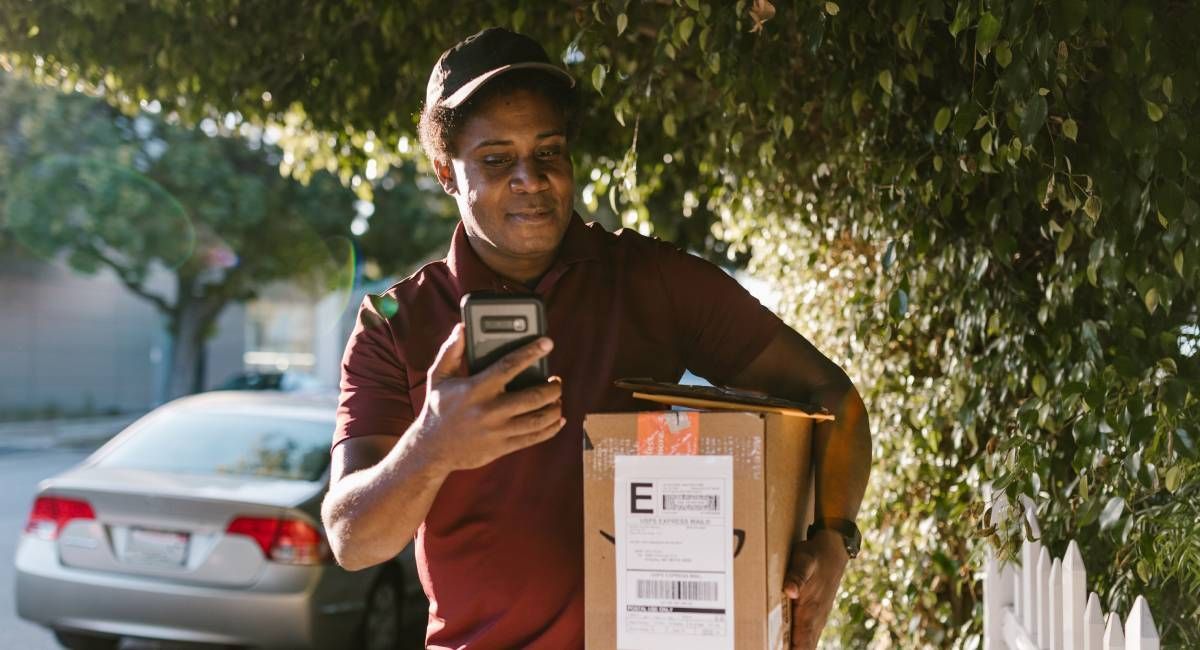
Courier delivering a parcel and checking his phoe ne
By Fiona Paton July 21, 2026
What is PAF? The Postcode Address File (PAF®) is Royal Mail’s definitive database of every deliverable address and postcode in the UK. It covers over 32 million delivery points and is updated monthly. If your business relies on accurate address data, at checkout, in your CRM, or for deliveries, PAF is the source that keeps it current. July 2026 in numbers Royal Mail made 54,025 changes to PAF this month. That is not a small number. It represents new homes that need delivering to, businesses that have moved or closed, streets that have been renamed, and addresses that were simply wrong and have now been corrected. Every one of those changes is a record in someone’s database that may now be out of date, and a delivery, a campaign, or a customer communication that could go wrong if the data hasn’t been updated. Delivery point changes at a glance Here’s the full breakdown of what changed, amended, and was removed from PAF in July:
By Fiona Paton July 20, 2026
The Address Is Only Half the Journey. Meet nShift. Fetchify ensures the address is correct at checkout. nShift makes sure the parcel gets there. A validated address is a great start, but it's only half the journey. From there, the parcel still has to find the right carrier, the right label, and the right doorstep. That's a different problem, and it's the one nShift solves. What nShift does nShift is a delivery management platform connecting businesses to 1,000+ carriers across 190 countries through a single integration, checkout, delivery options, carrier selection, tracking, and returns, all in one place instead of a separate system per carrier. Customers using nShift see a 20% increase in conversions at checkout and up to 60% fewer "where is my order" queries. Superdry is a good example with 515 stores, 21 websites, and shipping to 100+ countries. As the business scaled internationally, nShift let them onboard new carriers fast and get full visibility across every shipment. As Gordon Knox, Superdry's Business Transformation and Logistics Director, put it, onboarding carriers quickly was essential to a growing international business; that's exactly what they got, plus the data to hold carriers accountable on cost and service. Why we're recommending them Some of nShift's own clients already use Fetchify to validate their checkout data, so we've seen firsthand what good address data unlocks downstream in nShift's platform. That's the real reason for this partnership: the two products solve adjacent halves of the same problem, and we've watched it work in practice. Fetchify validates the address in real time, catching typos, missing flat numbers, and misspelt street or town names as the customer types, without slowing the checkout down, and confirms phone and email are live at the same time. That clean, structured data flows straight into nShift, which picks the right carrier automatically and keeps the customer updated with branded tracking. No reformatting. No manual fixes. No booking failures from bad data. The result: higher conversion, fewer failed deliveries, fewer support tickets, because the two weakest links in the checkout-to-doorstep chain (bad addresses, clunky carrier logistics) are both handled properly. Who this is for Any ecommerce business shipping physical goods stands to benefit, especially if you're juggling multiple carriers, shipping cross-border, or scaling into markets where one carrier doesn't cover it. If delivery reliability has become as much of a pain point as address accuracy, this is worth a look.
Show More