The High Cost of Lost Parcels – And How Better Address Data Validation Can Save Your Ecommerce Revenue

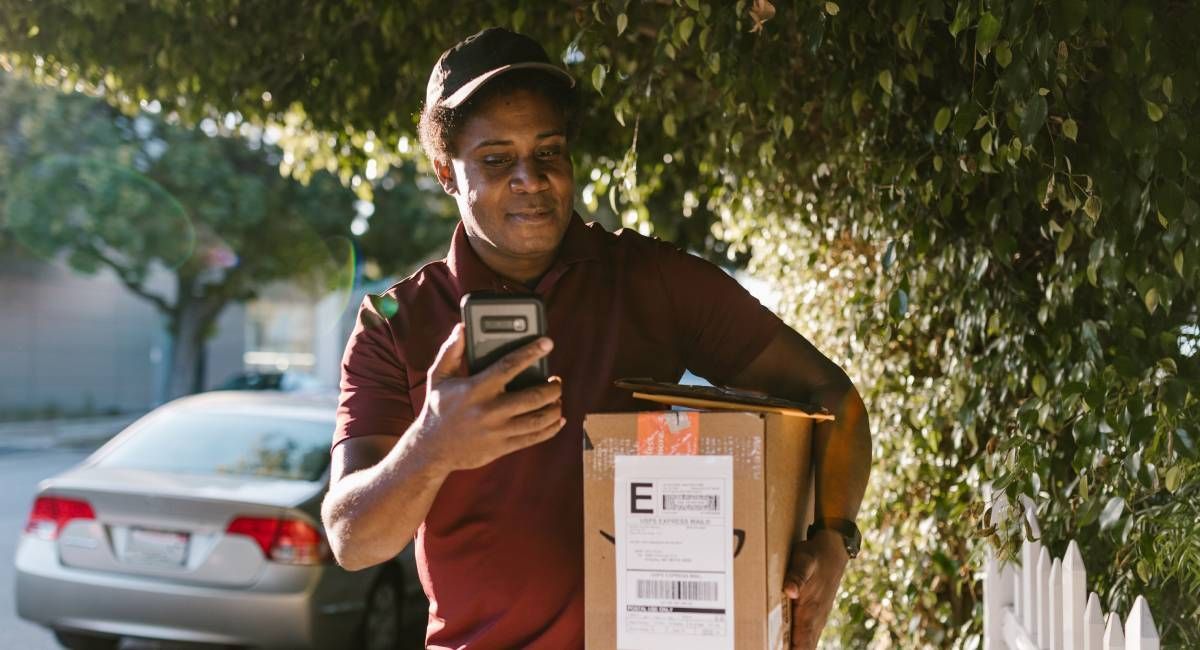
An article in Ecommerce News recently put a number to something every online retailer dreads: lost parcels. In Q4 2024 alone, European ecommerce retailers lost €500 million in revenue due to 3.72 million undelivered parcels. That’s roughly €145 per parcel in direct and indirect logistics costs.


And while the official rate of “lost” parcels is just 0.06%, the reality – accounting for misdelivery, theft, and reporting gaps – is likely closer to 0.7%. That’s 1 in every 143 parcels.


The Hidden Costs of a 'Lost' Delivery


For enterprise-scale ecommerce operations, the implications scale fast:

  • Lost product and packaging costs
  • Repeat fulfilment and reverse logistics
  • Customer service team time and refunds
  • Increased churn and checkout abandonment
  • Damage to brand reputation and online reviews


So Why Are Parcels Going Missing?


Many issues originate in the last mile of the delivery process. The root cause is often poor data quality:

  • Incomplete or inaccurate delivery addresses captured at checkout
  • Manual amendments to address fields by warehouse or courier staff
  • Ambiguous delivery locations (e.g., "front porch")
  • Lack of precise geolocation data for drop-off
  • Inadequate or unverifiable proof of delivery


Some losses are unavoidable, but most stem from gaps in ecommerce data validation and fulfilment process transparency.


What Retailers Can Control with Smart Logistics Data


While you can’t eliminate theft or accidents, you can reduce missed deliveries and failed first attempts through better data validation and delivery insights:

  1. Real-Time Address Validation at Checkout
    Fetchify’s ecommerce address validation tools connect directly with official data sources including Royal Mail PAF and the Multiple Residence dataset. This ensures accurate delivery details for apartment blocks, HMOs, student housing, and more. Unlike generic autocomplete tools, this is verified delivery point data.
  2. Rooftop-Accurate Geocoding for Pinpoint Delivery
    Fetchify’s Rooftop Geocodes assign precise latitude and longitude to verified addresses – helping carriers reach the exact doorstep, not just the postcode centroid.
  3. Proof of Delivery with Location and Time Stamping
    Our data solutions integrate seamlessly with POD technologies, supporting timestamped, geo-tagged delivery images. Customers can also submit geo-located photos during disputes, enabling faster, fairer resolutions.
  4. Map-Based Address Confirmation for Shoppers
    By embedding a zoomed-in map in the checkout process, ecommerce brands allow customers to visually confirm their delivery location. This prevents ambiguous or misentered addresses from the start.
  5. Audit Trails and Address Change Tracking
    Fetchify tracks address field edits and changes across the fulfilment chain, helping to pinpoint where a delivery went wrong and maintain data accountability.


Marginal Gains. Major Ecommerce Impact.


Smart logistics and address data validation might only reduce parcel loss by fractions of a percent – but the impact is huge:

  • A 0.1% improvement = thousands of saved parcels = millions in recovered revenue
  • Fewer failed deliveries = less pressure on customer support teams
  • Accurate addresses = better first-time delivery success and lower last-mile costs


Conclusion: Delivery Accuracy is a Data Challenge


Lost parcels aren’t just a logistics challenge. They’re a symptom of poor data validation in ecommerce. From checkout to doorstep, the journey must be powered by precise, verified data.


Fetchify helps online retailers solve this problem with address validation, geolocation, and enhanced fulfilment transparency.


If you want to stop asking “Whose front door is this?” – start with smarter ecommerce data.


Want to improve delivery success and reduce failed parcels? Contact Fetchify to book your free address data health check.
About Fetchify


Fetchify’s address lookup and data validation platforms cover more than 250 countries, and increases customer conversion with the fastest, most accurate customer data capture. Fetchify’s flagship products – Address Auto Complete and Postcode Lookup – reduce friction at the checkout, and also significantly increase the number of successful deliveries. Founded in 2008, Fetchify processes millions of data transactions every day for clients ranging from startups to established high-street names, and offers a full suite of data validation tools, including phone, email and bank, too.

By Fiona Paton May 26, 2026
There is a lot of enthusiasm right now about what AI can do for ecommerce and CRM teams. Personalisation at scale. Predictive analytics. Automated outreach that learns and adapts. The pitch is compelling, and much of it is real. But there is a foundational question that almost nobody is asking loudly enough: what happens when you run AI on bad data? The answer is not that the AI fails gracefully. The answer is that it fails at scale, confidently, and in ways that are harder to trace than a simple spreadsheet error. This is not a theoretical risk. It is already happening inside the organisations that have moved fastest to adopt AI-driven tools without first addressing the quality of the data those tools run on The assumption nobody questions Most organisations treat AI as a layer that sits on top of their existing data. Feed in the CRM, connect the customer database, and point the model at the transaction history. The assumption is that AI is smart enough to work around imperfections. It is not. AI systems are pattern recognition engines. They find what is consistent in the data and treat it as a signal. If your data consistently contains errors - outdated addresses, duplicate records, lapsed contacts still marked as active - the AI learns those patterns as the truth. It bases its predictions, segments, and recommendations on a foundation that does not reflect reality. B2B contact data decays at 30% per year. For a database of 100,000 records, that means 30,000 entries are becoming inaccurate every twelve months. When an AI personalisation engine is drawing on that data to decide who to target, when to contact them, and what to offer, it is working with a picture of your customer base that is one-third wrong "AI doesn't fix bad data. It amplifies it." What this looks like in practice The problems that emerge are not dramatic. They are quiet and cumulative, which makes them harder to catch. Automated email sequences reach the wrong people or the wrong addresses, generating hard bounces that damage your sender reputation and, in serious cases, trigger blocks from email service providers. Personalisation that references a customer's last purchase or location draws on a record that has not been updated in two years. Predictive models identify high-value customers to target for retention campaigns - but a portion of those customers moved, changed roles, or lapsed long ago. Each of these is a cost. Collectively, they represent a significant drag on the performance of tools that were supposed to be driving efficiency. The irony is that AI makes these problems less visible, not more. A human reviewing a list might notice that an address looks wrong. An AI processes it at speed and acts on it. A case study: what happens when AI meets dirty data A professional services firm recently experienced this directly, who work with our sister company FLG for lead management. The team began bulk emailing an existing database through their email marketing system - a reasonable use of automation for a business trying to re-engage contacts at scale. The data, however, was old. Hard bounces accumulated quickly, and their account was flagged and blocked from sending. Fetchify cleansed the data. Contact information was standardised, and inactive or undeliverable entries were identified and removed. When they resumed outreach, the results were immediate - higher engagement, no delivery issues, and the kind of performance the automation was always supposed to deliver. The AI-driven outreach did not fail because of the tools. It failed because the data had not been maintained. Once the data was clean, everything else worked as intended. The AI readiness question organisations should be asking As AI becomes a standard component of ecommerce and CRM operations, the conversation around data quality needs to change. It is no longer just a compliance issue or an operational nicety. It is a prerequisite for AI to function as intended. Before deploying any AI-driven personalisation, automated outreach, or predictive analytics tool, the right question is not 'which AI platform should we use?' It is 'is our data clean enough for AI to learn from?' For most organisations, the honest answer is no - not without first running a data cleanse. The good news is that this is not a complex or expensive process. It is a one-time exercise that resets the foundation, followed by ongoing validation to prevent decay from accumulating again. What clean data actually enables Organisations that address data quality before deploying AI achieve fundamentally different outcomes. Personalisation engines draw on accurate records and produce recommendations that reflect the real customer base. Automated outreach reaches real inboxes and generates real responses. Predictive models identify genuine opportunities rather than ghost records. The regulatory dimension is worth noting, too. The ICO can issue fines of up to £17.5 million or four per cent of global annual turnover under UK GDPR for data governance failures. AI that acts on inaccurate or out-of-date data does not protect organisations from that exposure - it amplifies it, at speed and scale. Clean data is not an enhancer of an AI strategy. It is the essential prerequisite that makes an AI strategy viable. The organisations seeing the best results from AI aren't necessarily the ones with the best tools. They're the ones with the cleanest data. Start with a free data health check and find out where you stand.
By Fiona Paton April 28, 2026
A fresh chapter begins After eight years of travelling to exciting places in the world of events, Sarah has finally unpacked her bags and settled into a brand‑new adventure with the ClearCourse group at Fetchify. What makes this move so exciting is that Sarah isn’t just bringing a suitcase full of experience - she’s also carving out space to learn, grow, and lend her support wherever it’s needed. Whether it’s her customers, her teammates, or her family, Sarah has a knack for showing up with warmth and dedication. We caught up with her to hear how the transition is going, and true to form, she’s embracing the change with positivity and an eagerness to learn. It’s clear she’s already making her mark, blending her event‑world expertise with fresh energy for this next chapter. Closing a chapter at Fusion I loved my job and team at Fusion - being able to travel to places both at home and abroad was truly the opportunity of a lifetime. Having started as an Account Exec, I was a Senior Account Manager before the arrival of my first child. After taking a break to spend precious time with my little one, I later returned part‑time in a Customer Success role. Fast forward a few years, and with the arrival of my second child last September, I felt the pull for something new - a fresh challenge, a different rhythm. The opportunity to join the team at Fetchify came at just the right moment, offering me the chance to blend my wealth of experience with the excitement of a new chapter. Stepping into my new role My new adventure starts as Customer Service Manager, taking charge of support queries that come through the helpdesk and lending a hand wherever I can - whether that’s to customers or my teammates. Coming from a role where I knew the ins and outs like the back of my hand, it feels a little strange to be starting fresh again. But that’s part of the excitement: everything is new, and every day brings a chance to learn. With so many different aspects to Fetchify, I’m on a huge learning curve, and while that can feel daunting, it’s also energising. I’m ready to grow into this role and make it my own. The thrill of something new I’m really excited about the chance to learn and develop new skills. This role feels like an opportunity to carve out a fresh level of dedicated support for customers - one that’s not only effective but also personable. My background gives me a unique edge in supporting the team, too, especially the account managers. Having walked in their shoes, I know what’s required and, in time, I hope to anticipate where I can step in to help. It’s a win‑win all round: customers get thoughtful, tailored support, and the team gains a colleague who understands their world inside out. And for me, it’s the excitement of growing into something new while making a real difference. Finding my place in the team I feel so fortunate to be working with amazing people again - I’m absolutely loving my new team. They’re inspirational, friendly, and did I mention knowledgeable? Whatever you need, you just have to ask, and someone is always on hand to support me at this stage. It’s also great to be in such a flexible role, where the team trusts you to work unsupervised because they know you’ll work hard and give 100%. I’m really looking forward to contributing in ways that take some of the load off them and free them up, whether that’s by stepping in or taking initiatives along the way. Life beyond the desk When I’m not working, I happily spend all my time with my family. We love getting outdoors - whether it’s exploring country parks, going for long walks, or just enjoying nature together. Spending time with close friends who also have kids is another favourite. The children play, we catch up, and it always feels easy and fun. Honestly, anything goes as long as my children and family are with me. Family comes first, always. When I became a mum, I promised myself I would be there to spend time with them, and that’s something I hold onto every single day. Looking ahead Working as an Account Manager in events was a lot like project management - overseeing every detail and making sure everything came together. That’s something I’ve always enjoyed and feel confident in, so if the chance comes up to use those skills again later, that would be great. For now, though, I’m really happy on this new path. It’s fresh, it’s challenging, and I’m enjoying everything it brings.
By Fiona Paton April 27, 2026
In today’s uncertain and unpredictable world, it’s difficult to find any sector that isn’t under pressure. Costs are rising, geopolitical pressures are mounting, and many companies’ profitability levels are declining. From discounting to growing fulfilment costs, it’s clear that turning a profit in the fast-moving realm of ecommerce is becoming increasingly harder to achieve. Earlier this month, research unveiled by International Logistics Group highlighted how fulfilment costs and operational pressures are now overtaking marketing as the biggest barriers to growth. Put another way, ecommerce brands are no longer struggling to generate demand, but struggling to fulfil it. As a company built around postcode lookup software, Fetchify gets to regularly look behind the curtain and see first-hand how ecommerce companies are struggling with inefficiencies; inefficiencies that are, effectively, eroding the bottom line. Generally speaking, there’s often one thing that jumps out as a potential area for improvement. Thankfully, it’s also an area that Fetchify can easily resolve. Clean data is good data Customer data sits at the core of any ecommerce company’s operations. The irony, however, is that despite it being an organisation’s lifeblood, it’s often littered with errors and duplications, all of which eat further into profit margins if these inaccuracies result in failed deliveries, reshipping costs and lost conversions at checkout. Smart Routes , a route optimisation firm, for example, claims the average cost per failed delivery is £11.60. Not only that, but 70 per cent of shoppers are unlikely to return after a failure. It doesn’t take that many of these before you’ve significantly eaten into the bottom line with costs that are avoidable, damaged your reputation and lost future business. This is where data quality becomes a commercial priority, not just a nice to have. Fetchify's Data Cleansing service, for example, validates records against Royal Mail PAF® data, standardises formats for phone and email contact data, improves data health by giving longer-term usability, and helps organisations keep their customer contact databases clean and compliant. We’ve launched this service on the basis that maintaining high-quality data standards is no longer optional. It’s mission critical. Avoiding ‘data decay’ Getting your data right at the point of capture is crucial. However, maintaining your database is just as important. It’s also a bit like tending to your garden – it needs constant attention if you want it to stay in shape. According to The Smarketers , B2B contact data decays at a rate of 30 per cent each year. Or, to explain it in layman’s terms, if your database of customers is 100,000 strong, 30,000 of them become inaccurate every 12 months. If you’re sending communications to the wrong person, then you’re damaging trust. If you’re not sending communications to 30 per cent of your prospective customer list, then you’re missing opportunities. Either way, you’re losing out. As businesses face growing pressure to improve delivery performance without passing on costs, our view is that getting your data right – and ensuring it stays right – is a quick, easy and inexpensive way in which to address both requirements. The Bottom Line Customer expectations are rising in tandem with intensifying competition. There is no longer any room for inefficiencies. From Fetchify’s standpoint, organisations that invest in data cleansing tools are gaining a competitive advantage and reducing wastage. Not only that, but they’re also lowering operational costs by reducing the risk of failed deliveries, increasing the chances of conversion and creating a solid foundation for ongoing, personalised marketing. The good news is that it doesn’t have to be expensive – it just needs to be precise. Clean data improves operations and protects margins. In a market where every cost counts, getting your data right is one of the simplest ways to stay competitive and stay profitable. Want to see how clean data could improve your margins? Discover how Fetchify’s data cleansing solutions can help you reduce costs, improve delivery success and unlock better performance by calling a member of the team on +44 (0)333 014 1992. 
A man looking at a pc confused, and looking for clarification from a colleague over the phone
By Fiona Paton April 13, 2026
A man on his mobile, looking at his PC
Show More